
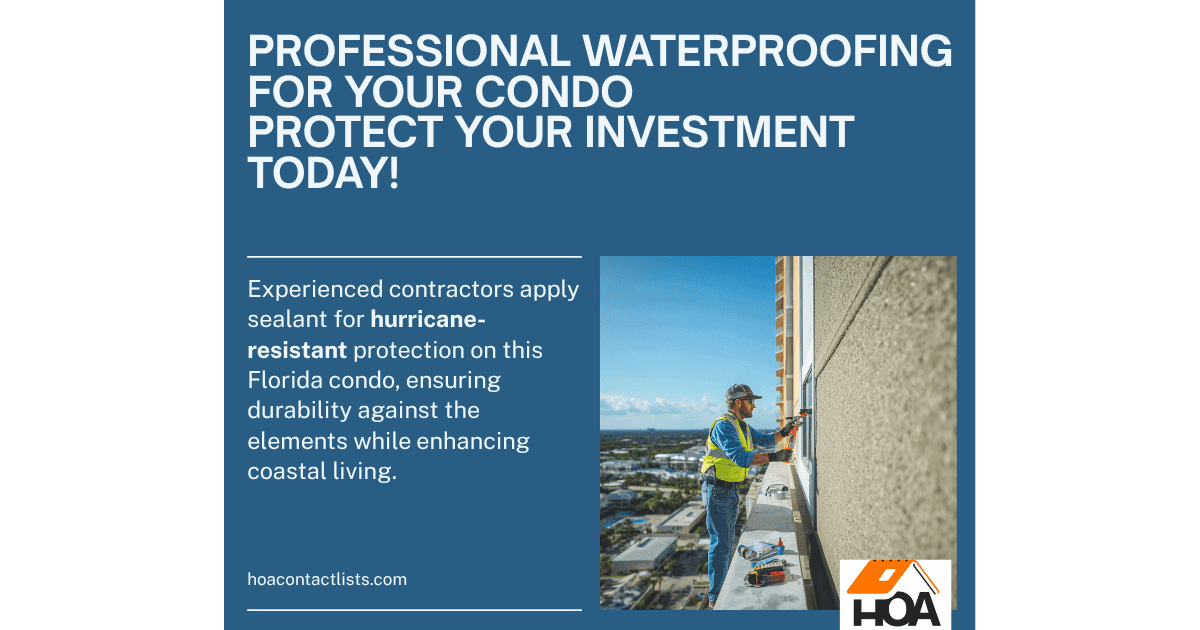

Florida’s combination of heavy rainfall, humidity, salt air, and aging concrete infrastructure makes waterproofing one of the most critical maintenance needs in HOA and condo communities. For waterproofing contractors, HOA and condo contracts represent large-scale projects with recurring maintenance cycles that keep your crews busy year-round. Additionally, Florida’s milestone inspection law has exposed waterproofing deficiencies in thousands of condo buildings, creating unprecedented demand. Winning waterproofing HOA condo contracts starts with reaching the boards who control these budgets.
Why Waterproofing HOA Condo Contracts Keep Florida Contractors Busy Year-Round
Water intrusion — driven by Florida’s structural integrity requirements — is the number one maintenance challenge for Florida condo buildings. In fact, the combination of driving rain, high water tables, and salt air attacks building envelopes from every direction. Consequently, boards must invest in waterproofing to protect their structures and avoid costly interior damage claims.
Moreover, Florida’s structural inspection requirements have revealed widespread concrete deterioration caused by water infiltration and rebar corrosion. As a result, condo boards are fast-tracking waterproofing projects that they might have deferred in the past. Furthermore, insurance carriers increasingly require proof of waterproofing maintenance as a condition of coverage renewal.
Where the Waterproofing Work Is in HOA and Condo Communities
Community waterproofing projects cover many building systems. Specifically, common opportunities include:
- Exterior wall coating and elastomeric sealing
- Parking garage deck coating and joint sealing
- Balcony and walkway waterproofing membranes
- Below-grade foundation waterproofing
- Roof-to-wall transition sealing
- Expansion joint replacement
- Concrete restoration and rebar protection
- Pool deck and amenity area waterproofing
In particular, parking garage waterproofing represents some of the largest contracts in the trade. Indeed, a multi-level parking structure can generate a coating project worth hundreds of thousands of dollars. Of course, the maintenance cycle means the work returns every seven to ten years.
How to Reach the Boards Who Approve Waterproofing Projects
Waterproofing projects require board approval and often draw on reserve funds or special assessments. Therefore, reaching board members during their budget planning cycle gives you the best chance of inclusion. Importantly, many boards rely on engineering reports to justify waterproofing investments, so aligning your proposal with existing inspection findings strengthens your pitch.
Additionally, boards that have received milestone inspection reports identifying concrete or envelope issues are actively seeking waterproofing solutions. Consequently, timely outreach to these communities produces the highest conversion rates. HOA Contact Lists provides verified board member contacts so you can reach the right decision-makers at the right time.
Positioning Your Waterproofing Company for Community Contracts
Boards want waterproofing contractors who understand building science and can deliver long-term solutions. Specifically, emphasize your experience with multi-story buildings, product warranties, and ability to coordinate with structural engineers. Furthermore, offering phased approaches helps boards manage costs across multiple budget cycles.
Moreover, providing detailed inspection reports with photos and moisture readings demonstrates technical expertise. As a result, boards trust your assessment and feel confident in your recommended scope of work. Ultimately, the waterproofing contractor who educates the board wins the project.
Warranty Considerations for Long-Term Waterproofing Contracts
Because waterproofing systems are expected to perform for seven to ten years or longer, warranty terms are often a deciding factor when boards compare proposals. Boards evaluating competing bids pay close attention to whether a warranty covers materials only, or materials and labor together, and whether the warranty is backed by the manufacturer directly or only by the installing contractor. A manufacturer-backed warranty carries more weight with boards, since it remains valid even if the original contractor is no longer in business years down the line.
Contractors who can offer manufacturer-certified installer status for their waterproofing products, and who clearly explain warranty terms in writing as part of the proposal rather than leaving boards to ask, build significantly more trust during the evaluation process. This matters even more for HOA and condo boards specifically, since board turnover means the members who approved a project may not be the ones dealing with a warranty claim years later, making clear, well-documented warranty terms essential for continuity.
Coordinating Waterproofing and Concrete Restoration Projects
Waterproofing failures and concrete deterioration are closely linked, since water intrusion is often the root cause of rebar corrosion and spalling. As a result, many of the largest community projects combine both scopes — concrete repair followed by a new waterproofing membrane or coating system — and boards increasingly look for contractors who can either perform both scopes directly or demonstrate a strong, established relationship with a concrete restoration partner.
Waterproofing contractors who position themselves as part of a coordinated structural repair team, rather than a standalone vendor bidding only on the sealing portion of a project, are better positioned to win the larger combined contracts that are increasingly common following milestone inspections. This also reduces a common point of friction for boards: disputes between separate concrete and waterproofing contractors over whose work caused a subsequent leak.
Start Winning Waterproofing HOA Condo Contracts Today
Florida’s aging condo inventory and stricter inspection requirements guarantee growing demand for waterproofing services. Therefore, contractors who reach boards early with data-driven proposals win these high-value projects. Search verified HOA contacts and connect with the condo boards investing in building protection.
Frequently Asked Questions
What waterproofing services do Florida condo communities need?
Condos need exterior wall coatings, parking garage deck waterproofing, balcony membranes, foundation sealing, expansion joint replacement, and concrete restoration. Additionally, milestone inspections frequently reveal deferred waterproofing needs.
How do you win a condo waterproofing contract?
Reach board members with proposals aligned to existing engineering reports. Emphasize building science expertise, product warranties, and phased cost management. HOA Contact Lists connects you with the boards making these investments.
Why does warranty type matter for waterproofing bids?
Manufacturer-backed warranties remain valid even if the installing contractor is no longer in business, which matters for long-lived systems and boards that experience turnover over the warranty period.
Should waterproofing and concrete repair be bid as one project?
Often yes. Since water intrusion frequently causes concrete deterioration, boards increasingly prefer contractors who can coordinate or perform both scopes to avoid disputes between separate vendors.
How long do commercial waterproofing systems typically last?
Most systems are designed to perform for seven to ten years or longer, depending on the product and application, which is why warranty terms and manufacturer backing are important considerations for boards.
Why Waterproofing Demand Is Accelerating in Florida
Florida’s milestone inspection law has exposed waterproofing failures in thousands of condo buildings statewide. Engineers conducting structural integrity assessments are finding water intrusion damage in balconies, parking garages, and exterior walls that boards did not know existed. The new reserve study requirements mean communities must now fund these repairs rather than defer them. For waterproofing contractors, this regulatory change has created an unprecedented pipeline of restoration projects. Companies that can demonstrate experience with post-inspection remediation work and provide engineering-backed proposals are winning these high-value projects at premium rates.
Related Articles
- One Community Roof Contract Is Worth Dozens of Single-Home Jobs
- How Concrete Contractors Win HOA and Condo Contracts
- What Florida’s Milestone Inspection Law Means for Contractors
- How to Win HOA & Condo Contracts in Florida
- What HOA Reserve Studies Mean for Contractors
- How to Follow Up After Your First HOA Outreach Email
Ready to reach Florida HOA board members directly? Search the Florida HOA database — 209,000+ verified contacts, searchable by county, city, or ZIP code.