
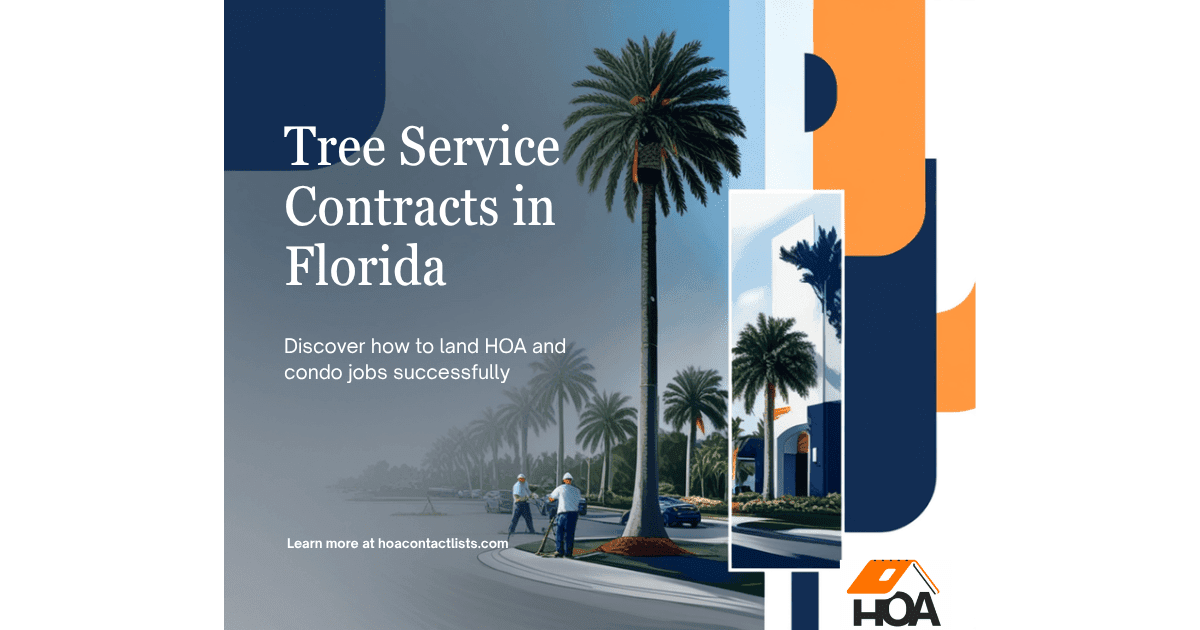

Florida HOA and condo communities are full of mature trees, palms, oaks, ficus, and tropical species that require regular trimming, storm preparation, and removal. For tree service companies, HOA and condo contracts provide steady, high-volume work that keeps crews busy every week. hurricane season creates surge demand for emergency tree removal that can generate months of backlog in a single storm. Winning tree service HOA condo contracts starts with reaching the board members who approve these vendors. For the broader playbook on approaching Florida boards, see our guide to winning HOA and condo contracts in Florida.
Why Tree Service HOA Condo Contracts Keep Florida Companies Busy Year-Round
Florida trees grow fast and never stop. In fact, the tropical climate means palms need annual trimming, oaks produce heavy canopy growth, and ficus trees drop aggressive root systems that damage sidewalks and foundations. Consequently, communities budget for tree maintenance year-round, not just seasonally.
hurricane preparedness drives significant tree work every spring and summer. Specifically, boards hire tree companies to reduce canopy weight, remove dead wood, and take down hazardous trees before storm season arrives. As a result, tree service companies that market to HOA and condo communities lock in recurring spring work alongside their year-round maintenance contracts.
Where the Tree Work Is in HOA and Condo Communities
Community tree work covers several key services. Notably, common opportunities include:
- Annual palm trimming across the community
- Canopy reduction and crown thinning for hardwoods
- Dead tree and stump removal
- Hurricane preparation trimming
- Root barrier installation for sidewalk and foundation protection
- Emergency storm debris removal
- New tree planting and landscaping integration
In particular, annual palm trimming contracts for large communities represent some of the most reliable recurring revenue in the tree industry. Indeed, a community with 500 palms needs every one trimmed annually. emergency storm work after hurricanes can generate more revenue in two weeks than months of regular operations.
How to Reach the Boards Who Approve Tree Service Contracts
Tree service decisions go through the board, landscape committee, or property manager. Therefore, reaching these decision-makers directly is essential. Importantly, many communities award tree work as part of their landscaping contract, while others keep it as a separate specialty contract.
communities that have experienced tree-related property damage or sidewalk trip-and-fall claims are highly motivated to hire a proactive tree service. Consequently, positioning your company as a risk-reduction partner resonates with boards. HOA Contact Lists gives you verified contact information for the board members who approve these contracts.
Positioning Your Tree Service Company for Community Contracts
Boards want tree service companies that are licensed, insured, and experienced with community-scale work. Specifically, highlight your ISA-certified arborists, crane capabilities, and ability to work around residents and vehicles. offering an annual tree health assessment gives boards a proactive maintenance plan they can budget around.
providing before-and-after photos from similar communities builds confidence. As a result, boards see exactly what your team delivers. the tree service company that combines expertise with clear communication wins the long-term contract.
Local Tree Ordinances and Permit Requirements
Many Florida municipalities and counties have tree protection ordinances that regulate the removal of certain species or trees above a specified size, sometimes requiring a permit and even replacement plantings when a protected tree is removed. HOA and condo boards are not always aware of these local requirements until a tree service points them out. That creates a real opportunity. Contractors who understand the local permitting landscape add genuine value during the proposal process.
Check local ordinance requirements before submitting a bid. Then explain any permit timeline or replacement obligations to the board upfront. That avoids the frustration of a stalled project after scheduling the work. This attention to local regulatory detail also signals professionalism that separates established companies from smaller crews who may not be familiar with every municipality’s specific rules.
Storm Debris Contracts and Emergency Response Work
Beyond routine maintenance, a pre-storm relationship pays off after a hurricane. Those tree services are often first in line for emergency debris removal. That work bills at emergency rates. It frequently involves insurance claims or FEMA-related debris reimbursement for common areas. Communities that already trust a tree service from prior seasonal work call that company first. The alternative is hunting for availability in the chaotic days after a storm. Demand across the entire region spikes at once.
Positioning your company for this emergency work means having a documented storm response plan. Share it with boards in advance. Cover expected response times, crew availability commitments, and how you prioritize existing contract customers during a widespread event. Boards value knowing they have a plan in place before hurricane season starts, rather than discovering during an actual storm that every tree company in the region is already booked.
Start Winning Tree Service HOA Condo Contracts Today
Florida communities need professional tree care every month of the year. Therefore, tree service companies that reach board members directly win more contracts and build recurring revenue. Search verified HOA contacts and start connecting with the communities that need your services.
Frequently Asked Questions
What tree services do Florida HOA and condo communities need?
Communities need annual palm trimming, canopy reduction, dead tree removal, hurricane prep, root barrier installation, emergency storm cleanup, and new plantings. tree health assessments help boards plan maintenance budgets.
How do you win an HOA or condo tree service contract?
Reach board members directly with a proposal highlighting your certifications, community experience, and proactive maintenance approach. HOA Contact Lists connects you with the decision-makers who approve tree service vendors.
Do HOA communities need permits to remove trees in Florida?
Often yes, depending on the municipality and the tree species or size. Many local governments require a permit and sometimes replacement plantings, so checking local ordinances before bidding avoids delays after a contract is signed.
How can a tree service company get priority for post-storm emergency work?
Establishing a pre-storm relationship through routine seasonal work makes communities more likely to call your company first, especially if you share a documented storm response plan in advance.
Is tree service typically part of a landscaping contract or a separate service?
It varies by community. Some communities bundle tree work into their overall landscaping contract, while others treat it as a separate specialty contract requiring a dedicated vendor.
Year-Round Demand for Tree Service in Florida
Unlike northern states where tree work is seasonal, Florida’s tropical and subtropical climate keeps trees growing twelve months a year. HOA and condo communities typically require quarterly common area maintenance, annual palm trimming, ongoing canopy management for oaks and other hardwoods, and emergency response during hurricane season. Communities in South Florida also deal with invasive species like Brazilian pepper and melaleuca that require specialized removal. For tree service companies, a single community contract can provide enough recurring work to keep a crew busy year-round, with storm season creating additional emergency revenue on top of the base maintenance agreement.
Related Articles
Ready to reach Florida HOA board members directly? Search the Florida HOA database, 200,000+ verified contacts, searchable by county, city, or ZIP code.