
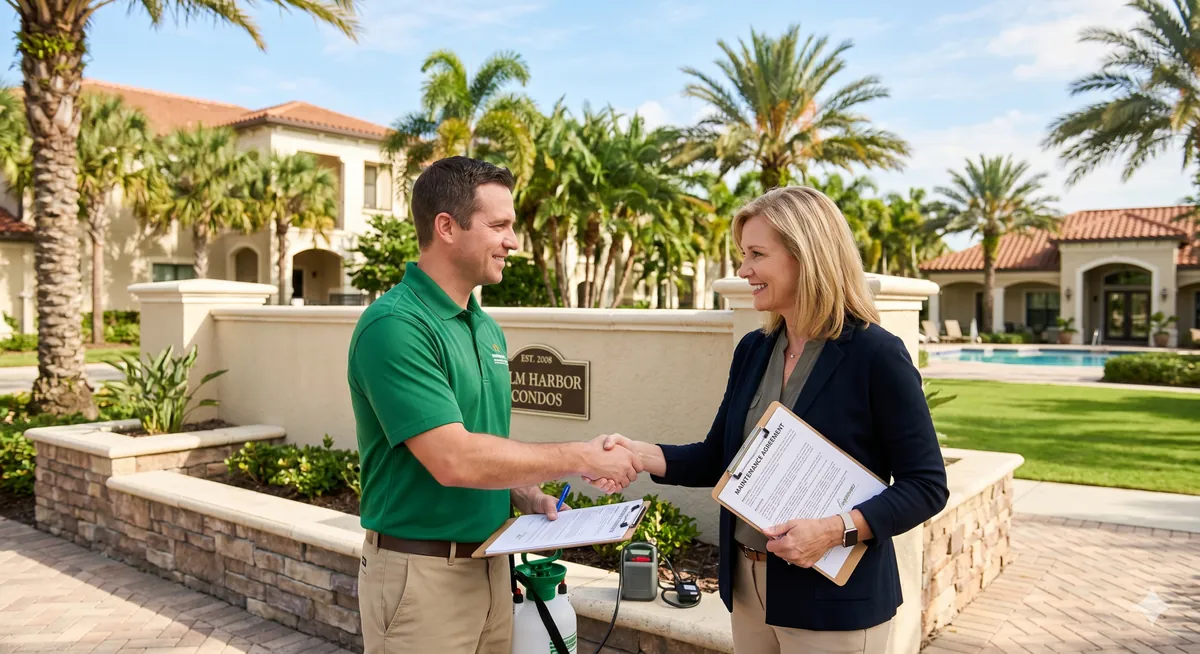

In fact, in Florida, pests never take a season off, which makes pest control HOA and condo contracts some of the steadiest work in the state. Heat and humidity keep ants, roaches, termites, rodents, and mosquitoes active all year, and a community with dozens of units cannot afford an infestation. For pest control companies, homeowner and condo associations are ideal customers: the work is recurring, the contracts cover entire communities, and the revenue shows up every single month. Here is why community pest control is such strong business and how to win it. Securing pest control HOA condo contracts starts with verified board contacts.
Why Pest control HOA condo contracts keep Florida companies busy year-round
As a result, florida’s climate is one of the most pest-friendly in the country. Warm temperatures and moisture mean infestations return continually, and termite pressure alone makes ongoing protection essential for the buildings an association is responsible for. Communities also have shared spaces, landscaping, and amenities that attract pests, so they need scheduled service rather than occasional one-off treatments.
Where the pest control work is in HOA and condo communities
association pest control covers far more ground than a single home. Common opportunities include:
- Recurring treatment of common areas, clubhouses, and amenity buildings
- Termite protection and bonds for community structures
- Mosquito control across shared grounds and water features
- Rodent and wildlife management in shared spaces
- Lawn and ornamental pest treatment tied to landscaping
Why community pest control contracts beat residential jobs
a residential account is small and easy to lose. A community contract is recurring revenue across many units and shared spaces, often renewing year after year. Termite bonds and monthly or quarterly service agreements create predictable income, and because the association is protecting valuable buildings, the work is steady and far less price-sensitive than chasing individual homeowners.
How to win pest control HOA condo contracts
Specifically, the companies that win community work reach the right person and offer a real program, not a single spray. To get in the door:
- Reach the board member or property manager who controls vendor contracts
- Lead with a recurring service program and termite protection, not one-time treatments
- Show you can service whole communities, common areas, and grounds
- Reach out before the current contract renews so you are already known
Winning the first community contract is the start of a recurring account that can anchor your route for years.
Florida pest control operators must be licensed through the Florida Department of Agriculture and Consumer Services.
Why Pest Control Is Essential for Florida Communities
Florida’s warm, humid climate supports year-round pest activity that other states only deal with seasonally. HOA and condo communities face persistent issues with termites, mosquitoes, rodents, palmetto bugs, ants, and in South Florida, iguanas. Community-wide pest control contracts cover common areas, building exteriors, landscaped grounds, and sometimes individual unit treatments. For pest control companies, these contracts provide monthly recurring revenue with predictable service schedules. Communities also value integrated pest management approaches that reduce chemical use in areas where children and pets are present, giving companies with IPM expertise a competitive advantage in the proposal process.
Related Articles
- How to Win Recurring HOA Landscaping Contracts
- How to Reach the Right HOA Decision-Maker
- How Plumbers Win HOA & Condo Contracts
- The Complete Guide to Winning HOA & Condo Contracts in Florida
Frequently Asked Questions
Are community pest control contracts recurring in Florida?
Yes. Importantly, florida’s warm, humid climate keeps pests active all year, so communities rely on monthly or quarterly service agreements and termite bonds. That makes pest control one of the most dependable recurring contracts a company can hold.
What pest control work do HOA and condo communities need?
communities need recurring treatment of common areas and amenity buildings, termite protection for community structures, mosquito control across the grounds, rodent and wildlife management, and pest treatment tied to landscaping.
How do you win an HOA or condo pest control contract?
In particular, reach the board member or property manager who controls vendor decisions, offer a recurring service program and termite protection rather than one-off treatments, show you can cover whole communities, and build the relationship before the current contract renews.
Search Contacts to find HOA and condo boards in your service area, or get started with 5 free credits.
Ready to reach Florida HOA board members directly? Search the Florida HOA database, 200,000+ verified contacts, searchable by county, city, or ZIP code.